Peptide Purity Overview 98%, 99% & Research-grade Described Prg
Peptide Purity & Quantitation Screening
What Hplc Can Not Verify Alone
- This is essential when the major question is whether the observed part matches the intended peptide or whether an alteration has been included as anticipated.
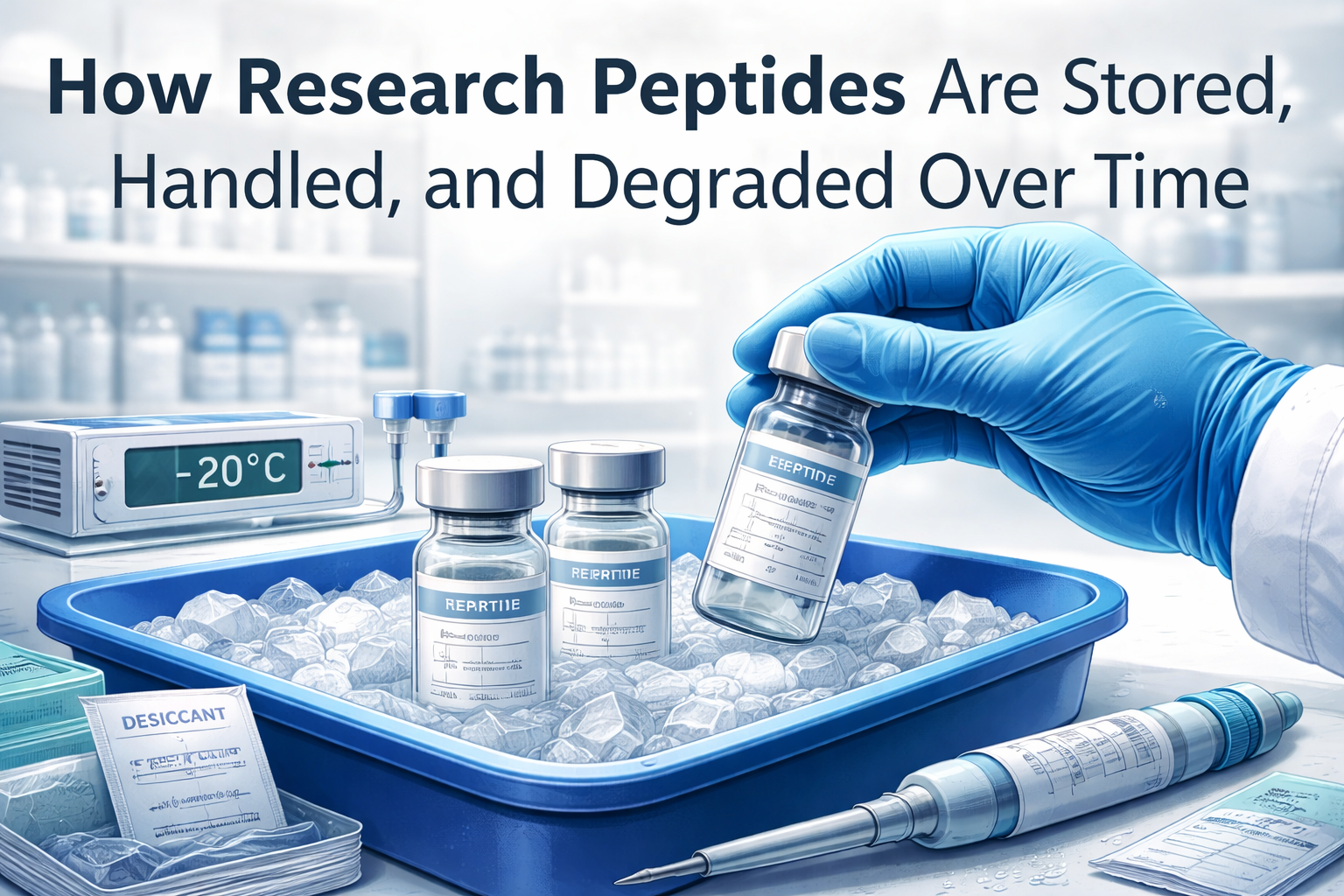
- This links directly with taking care of subjects such as peptide storage and peptide reconstitution.
- All products detailed are strictly for in-vitro laboratory r & d use only.
- Pureness is the percent of publications in the delivery that have every web page printed appropriately, in the appropriate order, without missing chapters and no added web pages stuffed in.
What Can We Offer?
Each peptide has a different anticipated molecular weight, so mass verification is not a generic badge; it is compound-specific evidence. For a much deeper identity-focused explanation, see Mass Spectrometry Peptide Verification. Identity testing verifies that what was synthesized is in fact the desired sequence.
While peptide purity isn't the only aspect, using inadequately identified reagents is a recognized factor to irreproducible outcomes. For a 10-residue peptide with 99.5% combining efficiency, you would certainly expect concerning 95% of the end product to be the unabridged series before purification. For a 30-residue peptide at the very same effectiveness, that drops to approximately 86%. This is why much longer peptides are tougher to create at high pureness and generally cost more. Pureness is the percent of publications in the delivery that have every page published appropriately, in the appropriate order, without any missing out on chapters and no additional web pages packed in. A 95% purity suggests that out of every 100 "publications" in your batch, 95 are perfect duplicates and 5 have some kind of mistake.It's feasible to have a peptide that is, say, 95% pure by HPLC and yet the internet peptide material is something like 70% of the powder's weight (the remainder being water and salts). Do not be startled-- this is typical and is typically determined by different analyses (like amino acid analysis). Peptide pureness is most typically identified by high-performance fluid chromatography (HPLC) with a discovery wavelength of 220 nm, which is optimal for finding peptide bonds. This technique separates peptides from contaminations and quantifies both target peptides and contaminants, making sure top quality samples for research. Nonetheless, accomplishing ultra-high purity (say 99%) can be technically difficult and might not constantly be necessary, as we'll review later. The key is understanding what level of purity suffices for your needs and how pureness is determined to begin with. For many research objectives, high pureness indicates you can be confident that the large bulk of the molecules in your vial are the correct peptide, which aids make certain speculative uniformity and reproducibility. Our process is designed to relocate from sample context review to interpretable peptide information with very little logical obscurity. Projects can range from one sample identity check to multi-lot comparability, recurring testimonial, solubility analysis, or stability-focused logical plans. Hydrophobic peptides, extremely standard series, modified constructs, and closely related analogs can be assessed with approach changes matched to their logical risks.